
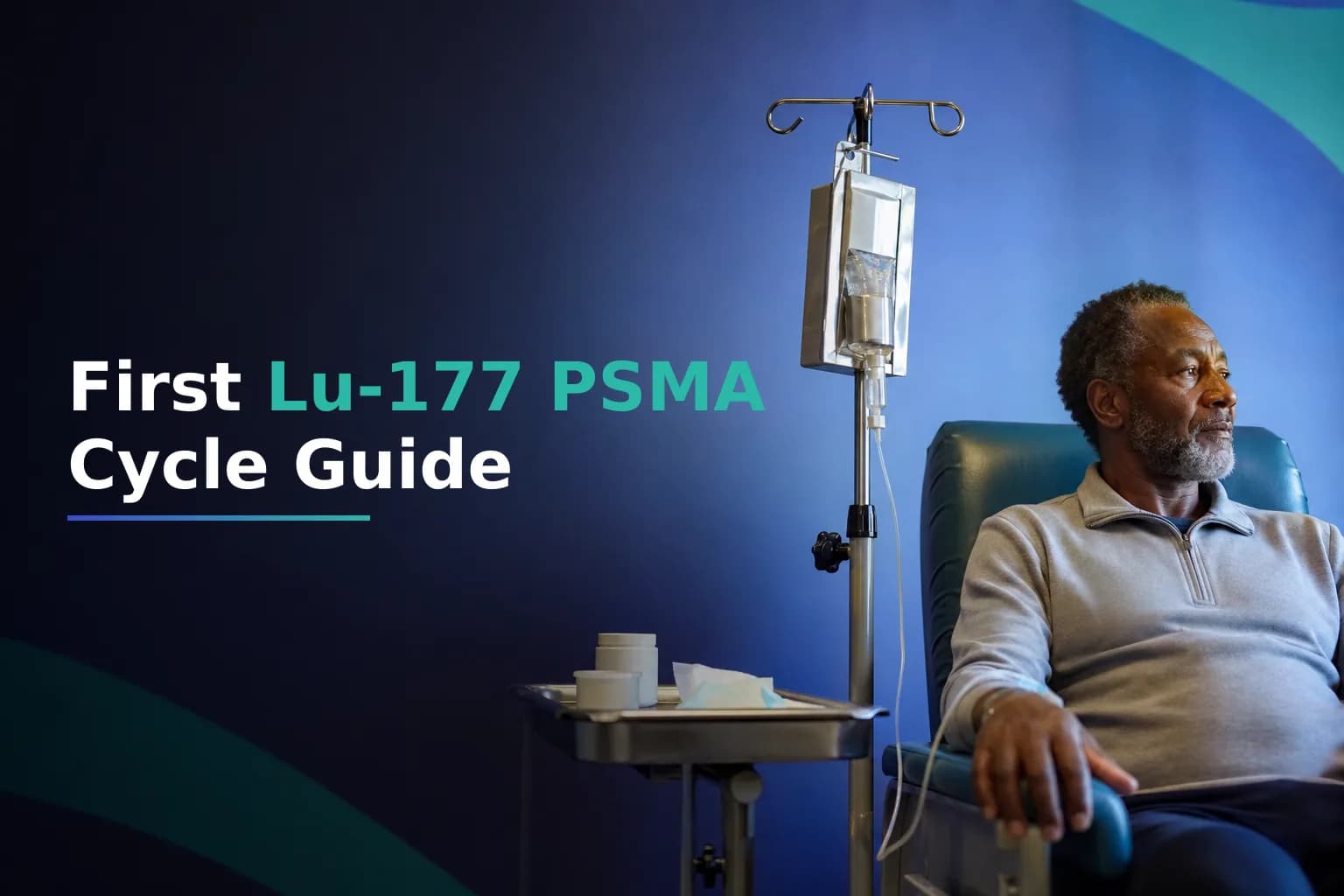
This article is for men with metastatic castration-resistant prostate cancer (mCRPC) who have tested PSMA-positive and are preparing for or seriously considering their first cycle of Lu-177 PSMA therapy. If your care team has given you a date, or if you are still weighing whether to proceed, knowing what each phase of the first cycle looks and feels like can help you feel more ready.
Lu-177 PSMA therapy (sold under the brand name Pluvicto, and known clinically as lutetium Lu-177 vipivotide tetraxetan) is a radioligand therapy that attaches a radioactive molecule to a protein. That protein finds prostate cancer cells that carry a marker called PSMA (prostate-specific membrane antigen). Once attached, it delivers radiation directly to tumor cells. The FDA approved lutetium Lu-177 vipivotide tetraxetan in 2022 for adults with PSMA-positive mCRPC who had already received androgen receptor pathway inhibition and taxane chemotherapy.
What follows is a realistic, step-by-step picture of what cycle one typically involves.
The First Lu-177 PSMA Cycle at a Glance
- Before your infusion: Confirm PSMA-positive status with a PSMA-PET scan and complete baseline blood tests.
- Infusion day: Attend a nuclear medicine unit, receive the drug through an intravenous line, and remain for observation before discharge.
- First 24 to 72 hours: Follow radiation precautions at home, rest, stay hydrated, and watch for early side effects such as nausea or fatigue.
- Weeks 2 to 4: Most side effects, if they occur, tend to peak during this window and then ease. Attend scheduled blood work follow-ups.
- Weeks 5 to 6: Your care team reviews your blood tests and PSA trends and decides whether to proceed to cycle two.
- Repeat: The approved standard schedule is one infusion every 6 weeks for up to 6 cycles total.
Before Cycle One: What Your Team Checks First
Your care team will not schedule an infusion until several things are confirmed. The most important is your PSMA-PET scan result. This imaging test shows whether your tumors carry enough PSMA protein for the therapy to reach them. If your scan shows PSMA-positive disease, you clear the first gate. If it does not, Lu-177 PSMA is unlikely to be the right fit for you right now. An honest conversation about alternatives matters more than pushing ahead anyway. Our guide on what your PSMA-PET results mean for Lu-177 eligibility explains what different scan patterns usually indicate.
Your team will also order baseline blood tests before cycle one. These typically include a full blood count (checking red blood cells, white blood cells, and platelets), a kidney function panel (creatinine and estimated GFR), liver enzymes, and your PSA level. These numbers form the baseline against which every future cycle is compared to check that your body is tolerating treatment safely.
You may be asked to stop or adjust certain medications before the infusion. Your nuclear medicine team will give you a specific list tailored to your case. Follow it closely. Some medications can interfere with how the drug is processed or with radiation safety calculations.
Infusion Day: What Actually Happens
You will arrive at a nuclear medicine unit, typically a specialist radiopharmacy or dedicated nuclear medicine suite, not a standard chemotherapy ward. The setting is usually calm and clinical. Staff will have shielding equipment visible nearby.
A nurse or medical technologist will place an intravenous line. The drug is then delivered directly into a vein. The infusion itself is typically short, often completed in under 30 minutes. Your total time at the facility will be longer, usually one to three hours, once you add preparation, the infusion, and a post-infusion observation period before discharge.
During the infusion, you will likely feel very little. Some patients notice mild warmth along the vein or a slight feeling of nausea. Few people have serious reactions during the infusion. Staff work with shielding equipment and minimize their time in close proximity while the drug is running. This is routine radiation safety practice, not a sign of any danger.
Most patients are discharged the same day. Some centers admit patients overnight, depending on local protocol and individual health factors. Your team will tell you what to expect before your appointment day.
For a more detailed look at what happens inside the infusion room, see our companion guide: what happens during your Lu-177 PSMA infusion.
Radiation Precautions in the Days After Your Infusion
After your infusion, your body will clear lutetium through your urine over several days. During this window, you carry a small amount of residual radiation. Your care team will give you written instructions before you leave. These typically include:
- Flushing the toilet twice after each use for the first few days.
- Washing your hands thoroughly each time after using the bathroom.
- Sleeping separately from your partner for a period your team specifies.
- Keeping physical distance from pregnant women, infants, and young children during the early post-infusion days.
- Not sharing towels or eating utensils during the initial days at home.
Safety guidance for Lu-177-based therapies indicates that restrictions on close contact with very young children may be needed for up to 16 days for infants, with shorter periods for older children. Your team will calculate the specific timeframes based on your individual dose. These precautions are not permanent and do not mean you are dangerous to be around. They are standard protocol for anyone receiving a radiopharmaceutical therapy.
For a full breakdown of what these precautions involve at home and when you can safely return to daily life, see our guide on radiation safety after Lu-177 PSMA therapy.
What Side Effects to Watch for After the First Cycle
Most side effects from Lu-177 PSMA therapy are manageable. The most commonly reported ones come from data across the VISION and PSMAfore clinical trials, which together included over 750 patients. According to FDA data for Pluvicto, the adverse reactions occurring in 20% or more of patients in those studies included:
- Fatigue - reported in 49% of patients
- Dry mouth - reported in 46% of patients
- Nausea - reported in 35% of patients
- Back pain - reported in 21% of patients
- Joint pain and decreased appetite - also commonly reported
Dry mouth may be the most unexpected side effect on this list. PSMA receptors are present in salivary gland tissue, and the therapy can affect those glands as well as tumor cells. The severity varies quite a bit between patients. For some it is mild. For others, it makes eating and speaking uncomfortable. Staying well hydrated and using mouth rinses can help reduce discomfort.
Nausea, when it occurs, tends to appear within the first 24 to 48 hours after the infusion and usually settles within a few days. Your team may prescribe an anti-nausea medication before or after the infusion as a precaution.
Fatigue is the side effect most patients describe most clearly. It often begins in the first one to two weeks after infusion and tends to ease during weeks three to five as your body clears the drug. Some patients feel close to their usual energy level within 10 days. Others need more rest for two to three weeks. Pacing your activity (resting when you need to, moving gently when you can) tends to help more than full bed rest.
A small number of patients experience a brief flare in bone pain within the first week after treatment. This is usually temporary and does not necessarily mean the therapy is not working. Let your team know if pain increases sharply so they can assess it promptly.
What Your Care Team Monitors Between Cycles
One of the most important parts of cycle one is what happens in the weeks after it. Your care team will order follow-up blood tests, typically around weeks four to five. The key markers they watch are:
- Full blood count: To confirm that your bone marrow is recovering and producing enough red cells, white cells, and platelets for the next cycle to be safe.
- Kidney function: Creatinine and eGFR, because lutetium is cleared through the kidneys, and kidney health determines whether treatment can continue at the same dose.
- PSA: Tracked over time to assess whether the cancer may be responding. One number in isolation tells you little. The trend across cycles matters more than any single reading.
You should know that PSA may rise briefly in the first few weeks after an infusion before it begins to fall. This is sometimes called a PSA flare, and it does not always mean the therapy has failed. Your oncologist will look at the pattern over multiple cycles and interpret it in context, not as a single data point. If your blood test results are within acceptable ranges and you are tolerating treatment, your team will clear you for cycle two. If something is out of range, they may delay the next cycle or investigate further. This is the monitoring system working as it should.
Planning Cycle Two and the Full Treatment Course
The VISION trial, the pivotal study that established the clinical benefit of Lu-177 PSMA therapy in mCRPC, used a schedule of 7.4 gigabecquerels every 6 weeks for up to 6 cycles. That is now the standard approved schedule. Whether all 6 cycles go ahead depends on your response to treatment, your blood work results between cycles, and whether any side effects require a dose hold or modification.
For international patients traveling to India for treatment, the 6-week gap between cycles is usually long enough to return home after cycle one, recover, complete local blood tests, and come back for cycle two. Many patients from the GCC, parts of Africa, and South Asia manage this routine across the full treatment course. If you are planning to travel for treatment and want a clinical view on whether your case is a good fit for this approach before committing to flights, you can arrange a teleconsultation with the Art of Healing Cancer team to go over your scans and records first.
What Honest Recovery Looks Like
Recovery between cycles is not the same for every patient. Some people complete the first infusion, feel mild fatigue for a week, and return to near-normal activity. Others spend two to three weeks managing significant tiredness, reduced appetite, and dry mouth before feeling more like themselves.
Neither experience means you did something wrong or that the therapy is not working. How a person responds depends on disease burden, overall fitness, prior treatment history, and individual biology.
Fatigue can also build across cycles. The first infusion may feel easier than the fourth. This is not inevitable, but knowing it is possible helps you plan. Gentle physical activity, enough protein in your diet, and protecting your sleep can help maintain your reserves across the full course. If sleep becomes disrupted during treatment (which some patients find happens, especially in the first weeks after infusion), bring this up with your care team. Some patients also explore non-prescription options to support rest. The Sleep and Stress range at Ayurnomics includes Ayurvedic formulations that may help alongside your clinical care, though these should complement and never replace your oncologist's guidance.
The most important thing you can do between cycles is keep your follow-up appointments and communicate openly with your team about what you are experiencing. Dose modifications are possible if side effects become difficult to manage, and there are often practical steps that can make each subsequent cycle more comfortable.
When to Talk to Your Doctor
Contact your care team promptly if you experience any of the following after your first Lu-177 PSMA infusion: a sharp increase in pain that does not settle within a few days; signs of infection such as fever, unusual chills, or sudden severe tiredness; unexpected bruising or bleeding; a significant drop in urine output; or any symptom that feels out of the ordinary for you. These may or may not be directly related to the therapy, but they all deserve prompt attention from your medical team.
If you have not yet confirmed your eligibility and want your PSMA-PET scan or clinical records reviewed by a specialist, you can send them through the Lutetium Therapy contact form to request an eligibility review. If Lu-177 PSMA therapy is not the right fit for your case at this time, a second opinion on which alternatives may be available to you is part of that same conversation.
This article is for general information and is not a substitute for medical advice. Always consult your oncologist or care team about your specific situation.
Frequently asked questions
How long does a Lu-177 PSMA infusion take?
The infusion itself usually takes under 30 minutes. Your total time at the nuclear medicine facility will likely be one to three hours, including preparation, the infusion, and a post-infusion observation period before you are discharged. Ask your treatment center for their specific timing so you can plan the day.
What are the most common side effects after the first cycle?
Based on pooled data from the VISION and PSMAfore trials, the most commonly reported side effects are fatigue, dry mouth, and nausea - each occurring in a significant proportion of patients. Most side effects are manageable and tend to ease between cycles, but you should report anything severe or sudden to your care team right away.
Can I go home the same day as my infusion?
Most patients are discharged the same day. Some centers admit patients overnight based on local protocol or individual health factors. Your nuclear medicine team will confirm the arrangement before your infusion day so you can plan accordingly.
How many cycles of Lu-177 PSMA therapy will I need?
The standard approved schedule is up to 6 cycles, given once every 6 weeks. Whether you continue to each subsequent cycle depends on how well you are tolerating treatment and what your blood tests show between cycles. Some patients receive fewer than 6 cycles if the cancer progresses early or side effects require stopping.
When will I know if the therapy is working?
Your care team will track your PSA level and blood markers between cycles. PSA may rise briefly early on - a temporary effect sometimes called a PSA flare - before it begins to fall. Response is usually assessed across multiple cycles rather than after just one infusion. Your oncologist will interpret trends over time, not any single reading in isolation.
Can I travel home between cycles if I am being treated abroad?
Many international patients return home between cycles, as the 6-week gap is generally long enough for travel and recovery. You will need to arrange local blood tests in your home country and share the results with your treatment center before cycle two is confirmed. Discuss the logistics in detail with your nuclear medicine team before your first cycle begins.