
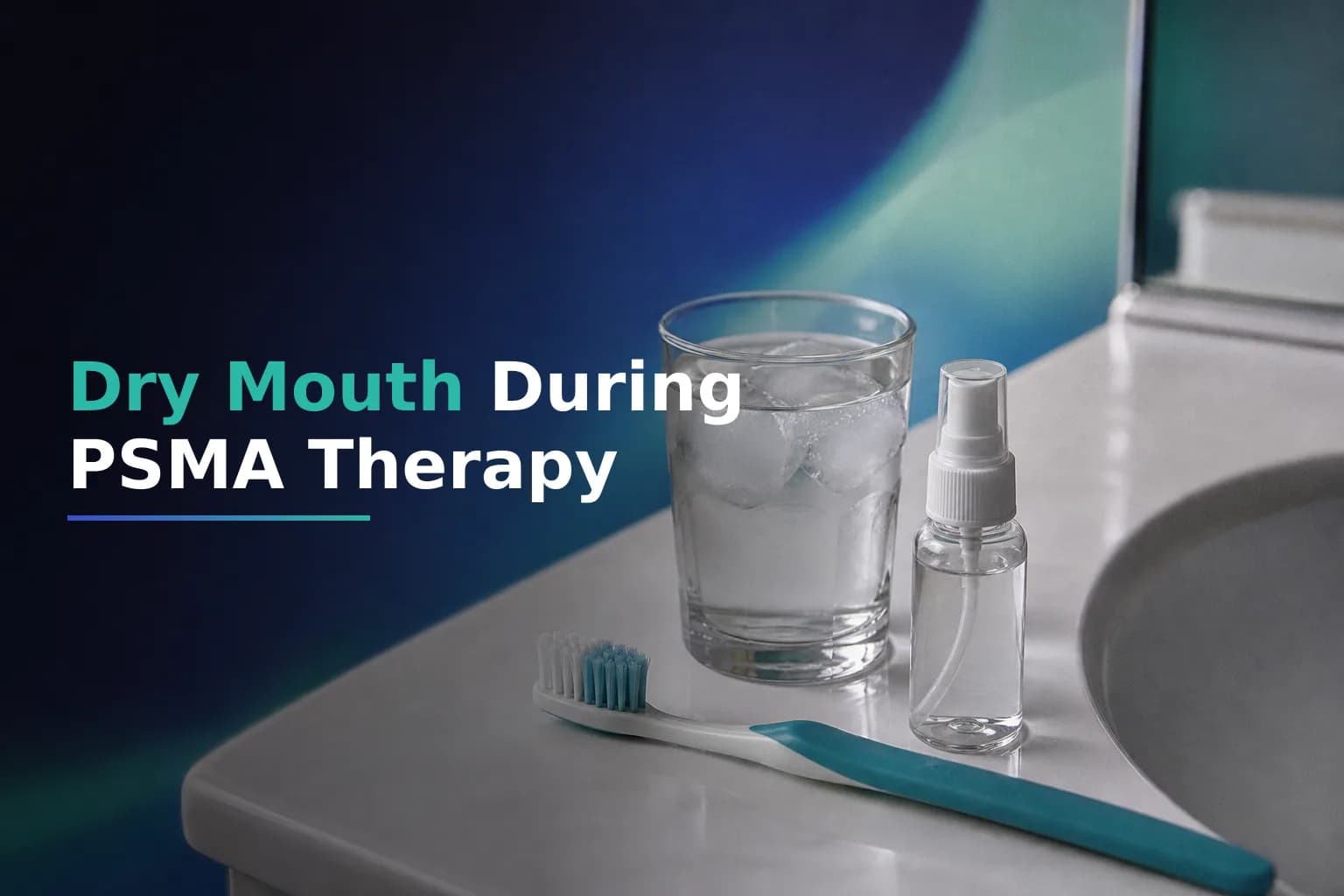
Dry mouth - clinically called xerostomia - is one of the most frequently reported side effects of lutetium Lu-177 vipivotide tetraxetan therapy for metastatic castration-resistant prostate cancer (mCRPC). It happens because the PSMA protein the therapy targets is also found in salivary glands. Most cases are mild to moderate and manageable with good oral hygiene, steady hydration, and some practical changes to what you eat.
If your oncologist has recommended lutetium Lu-177 vipivotide tetraxetan (brand name Pluvicto) for PSMA-positive mCRPC, you are probably focused on bigger questions - how well will it work, and are you eligible. But oral side effects, especially dry mouth and mouth sores, affect your daily life during the full treatment course. They change what you eat, how much you drink, and how comfortable you feel between infusions. Understanding them before you start helps you manage them better.
Why Does Lu-177 PSMA Therapy Affect Your Salivary Glands?
PSMA - prostate-specific membrane antigen - is found in high amounts on prostate cancer cells. That's what makes this therapy so targeted. But PSMA is also in healthy tissue, including the salivary glands - particularly the parotid glands on either side of your jaw and the submandibular glands under your chin.
According to the FDA prescribing information for Pluvicto, lutetium Lu-177 vipivotide tetraxetan distributes to salivary glands within approximately 2.5 hours of each infusion. This means the glands get radiation at each cycle. It's not bad targeting - normal salivary tissue has the PSMA protein. Over multiple cycles, that total dose can reduce how much saliva the glands make.
This is different from mouth sores that happen with chemotherapy drugs like docetaxel. Chemotherapy usually damages the mouth lining directly. With Lu-177 PSMA therapy, the main effect is on saliva production. When saliva drops, the mouth lining becomes drier and more prone to irritation. That's why dry mouth and mouth sores are often mentioned together, even though they happen through different paths.
How Common Is Dry Mouth During Lu-177 PSMA Therapy?
Dry mouth is one of the most common side effects in patients getting lutetium Lu-177 vipivotide tetraxetan, along with fatigue, nausea, and anemia. This is shown in the VISION trial, according to the National Cancer Institute drug summary for lutetium Lu-177 vipivotide tetraxetan.
A study of salivary gland toxicity in patients getting 177Lu-PSMA therapy, published on PubMed Central, found grade 1 xerostomia in approximately 14.3 percent of patients at baseline, rising to about 24.2 percent after two treatment cycles. In longer follow-up, xerostomia of grade 1 or 2 was observed in approximately 40 percent of patients.
Grades 1 and 2 correspond to mild and moderate dry mouth. Grade 1 means you notice the dryness but can still eat and drink fairly normally. Grade 2 means symptoms start to affect what and how much you eat or drink, and dietary changes help. Grade 3 or higher - severe, disabling dryness - is uncommon with standard lutetium Lu-177 vipivotide tetraxetan dosing.
A review on PubMed Central found that the parotid glands get the most radiation of the major salivary glands, and changes build slowly across cycles rather than appear suddenly after one infusion. This matters: if you start preventive habits before symptoms show up, you'll manage them better than if you wait until after they start.
What About Mouth Sores?
Mucositis - painful open sores on the inner cheeks, gums, tongue, or palate - is not common with Lu-177 PSMA therapy the way it is with high-dose chemotherapy. If you had docetaxel or cabazitaxel before, you may know what severe mucositis feels like. That level of damage doesn't happen with radioligand therapy.
What is more common is a drier mouth that irritates more easily. Saliva normally washes away food bits, buffers acids, and coats the mouth with a protective layer. When saliva drops, food that used to be easy can feel rough or scratchy. Dentures and dental appliances may rub. Small irritations that saliva would normally clear can last longer or turn into shallow sores.
A few patients develop mild mouth discomfort or shallow ulcers during treatment. Most can be managed. But if soreness hurts enough to affect your appetite or your ability to take other medications, call your care team. Unmanaged pain that disrupts nutrition and medications has its own bad effects, and your team can fix it quickly.
Protecting Your Mouth Before and During Each Cycle
The steps below are practical and low-risk. Most can be started before your first infusion rather than as a reaction to symptoms.
- See your dentist before treatment starts. Untreated cavities, gum disease, or cracked teeth get harder to manage once your mouth dries out. A dental visit before treatment lets your dentist suggest products for a drier mouth. Tell your dentist you're starting radioligand therapy so they can help you get ready.
- Switch to a soft toothbrush. Hard bristles can scrape tender tissue. Soft bristles clean just as well without hurting a dry mouth.
- Choose a gentle toothpaste. Some patients find that sodium lauryl sulphate - a foaming agent in many toothpastes - irritates their mouth during treatment. Sulphate-free options are easy to find. Ask your pharmacist or care team what they suggest.
- Rinse with salt and baking soda. Mix one teaspoon of salt and one teaspoon of baking soda in a cup of warm water. Use it several times a day to keep your mouth neutral and reduce bacteria on the lining. Don't swallow the rinse.
- Stay well hydrated around each infusion. Your care team will say to drink plenty of fluids before and after infusions to help your kidneys clear the drug. That same hydration helps your salivary glands. Sip water all day instead of drinking a lot at once.
- Use an artificial saliva spray or mouth lubricant. These over-the-counter products - water-based gels or sprays sold as saliva substitutes or mouth moisturizers - give short-term lubrication that reduces friction and discomfort. They don't restore gland function, but they can make several hours much more comfortable.
- Avoid alcohol-based mouthwashes. They dry out your mouth and make it worse. Talk to your care team before using any mouthwash during treatment.
If you're also tracking blood count changes across cycles, the guide on bone marrow suppression and low blood counts during Lu-177 PSMA therapy covers what to watch for and when to act.
Nutritional Strategies to Stay Comfortable and Well-Nourished
Dry mouth affects eating more than many patients think. It changes how food feels, slows chewing, and makes swallowing harder. Keep your calorie and protein intake stable during your whole treatment. Poor nutrition during treatment can affect how you handle later cycles, slow recovery, and reduce your energy between infusions.
- Choose moist, soft foods. Well-cooked fish, scrambled eggs, yogurt, oatmeal, ripe bananas, mashed vegetables, soft beans, and smooth nut butters are easier on a dry mouth. Add gravy, sauce, oil, butter, or broth to foods that would otherwise be dry - rice, chicken, bread - to make a real difference at every meal.
- Serve food cool or at room temperature. Hot food and hot drinks can irritate tender tissue. Cool smoothies, chilled yogurt, and warm (not hot) soups are often more comfortable right after each infusion.
- Sip water during each meal. Taking sips between bites helps break food into smaller pieces and move it to the back of your mouth for swallowing. Keep water at every meal instead of drinking separately.
- Avoid foods that worsen dryness and irritation. Alcohol, caffeine, tobacco, very spicy food, acidic foods and drinks (citrus, tomato sauces, fizzy drinks), and rough foods (crackers, dry toast, chips) all increase irritation and dryness. These restrictions are temporary and you can often relax them between cycles as your mouth gets back to normal.
- Consider high-calorie, high-protein drinks if appetite is poor. Ready-to-drink supplements can give you calories and protein in liquid form when you can't eat enough at meals. Your cancer dietitian can advise on what works for you and whether products interact with your medications.
- Use sugar-free gum or lozenges to stimulate saliva. Chewing helps any saliva your glands still make. Sugar-free is important - a dry mouth gets cavities more easily, and avoiding sugar reduces that risk.
Some patients ask about over-the-counter supplements - zinc, B vitamins, vitamin D, or other nutrients - that may support tissue health during radioligand therapy. Always talk to your oncologist before starting new supplements, since some can interact with treatment. You can discuss over-the-counter vitamin and mineral options with your care team, or review a range from Ayurnomics to discuss with them.
If treatment fatigue makes it hard to prepare meals or eat regularly, the guide on managing fatigue during Lu-177 PSMA therapy has practical strategies you can use with dietary changes.
What to Expect Across Multiple Cycles
Lutetium Lu-177 vipivotide tetraxetan is usually given in up to six cycles, spaced several weeks apart. Salivary gland changes build gradually across the course rather than appear suddenly. Many patients notice very little in the first or second cycle, then dry mouth becomes more noticeable starting around cycle three or four.
This gradual pattern means starting preventive habits early - before symptoms show up - works better than starting them after the dryness is already there. Your experience will likely change across cycles. Changes to what you eat and how you care for your mouth are normal and expected during treatment, not a sign something is wrong.
Between cycles, if you want to discuss your treatment progress or have questions, you can arrange a teleconsultation with the Art of Healing Cancer team. They can review your recent imaging, results, and symptom history to help you plan your next steps.
For a full picture of blood tests and checks your care team should run at each stage - including kidney function monitoring - the guide on kidney function during Lu-177 PSMA therapy explains what should be tracked.
If you're still deciding whether to start treatment or confirming eligibility, you can send your PSMA-PET scan and recent reports to the Lutetium Therapy team for an eligibility review. If Lu-177 PSMA isn't the right choice at this stage, the review includes a second opinion on what other options might work.
When to Talk to Your Doctor
Contact your oncology team if dry mouth affects your ability to eat, drink, or take medications comfortably. Also call if you develop painful sores that don't get better after a few days, notice changes in swallowing or speaking, or see signs of infection like white patches, swelling, or a bad taste. If you lose weight or lose appetite during treatment, ask for a referral to a cancer dietitian. A specialist's help can make a real difference in how well you handle the full course.
This article is for general information and is not a substitute for medical advice. Always consult your oncologist or care team about your specific situation.
Frequently asked questions
Will my dry mouth get better after I finish Lu-177 PSMA treatment?
For many patients, xerostomia improves gradually once treatment ends and the salivary glands have time to recover from the accumulated radiation dose. The extent of recovery depends on the total dose received by the glands across all cycles and individual variation. Some patients see a return to near-normal saliva production over a period of months. Others may experience some ongoing dryness. Your care team can give you a more specific picture based on how your glands responded during your course of treatment.
Are mouth sores a common side effect of Lu-177 PSMA therapy?
Painful mouth ulcers of the kind associated with high-dose chemotherapy are not a primary feature of Lu-177 PSMA radioligand therapy. Dry mouth is the more typical oral side effect. However, when saliva production drops, the mouth lining becomes more sensitive and more easily irritated, and some patients do notice mild oral soreness. If sores develop and are painful enough to affect your eating or medication routine, tell your care team promptly.
Should I see my dentist before starting Lu-177 PSMA treatment?
Yes, a dental check-up before your first infusion is strongly advisable. Any untreated cavities, gum disease, or cracked teeth become harder to manage in a drier oral environment, and dental work is best completed before treatment begins rather than during it. Let your dentist know you are starting radioligand therapy so they can advise on suitable toothpastes, rinses, and other products, and so they have a baseline record of your oral health.
What foods should I avoid if I have dry mouth during treatment?
Foods and drinks that tend to worsen dry mouth and oral irritation include alcohol, caffeine, tobacco, very spicy foods, acidic foods and drinks (citrus fruit, tomato-based sauces, fizzy drinks), and rough or dry-textured foods like crackers, dry toast, and crisps. Replacing these with soft, moist, cool foods is generally more comfortable and easier on sensitive tissue. These dietary changes are usually temporary and can often be relaxed between cycles as the mouth recovers some moisture.
Is drinking more water enough to manage xerostomia during Lu-177 PSMA therapy?
Drinking enough water is an important foundation, but water alone does not replicate all the lubricating and protective functions of saliva. Alongside staying well hydrated, strategies like using artificial saliva sprays or water-based oral gels, choosing moist and soft foods, rinsing with a salt-and-baking-soda solution, and chewing sugar-free gum can each add a layer of comfort. If dry mouth is significantly affecting your nutrition or quality of life, ask your care team about additional options including any referral to a speech and language therapist or dietitian.
Can I use regular mouthwash to help with oral soreness during Lu-177 PSMA cycles?
Mouthwashes that contain alcohol are generally best avoided during treatment, as alcohol is drying and can make xerostomia worse. Some antiseptic mouthwashes are used in oncology settings for specific purposes, but whether any particular product is appropriate for your situation is a conversation to have with your care team before you start using it. A gentle salt-and-baking-soda rinse is a widely used, low-risk alternative that most patients can make at home.