
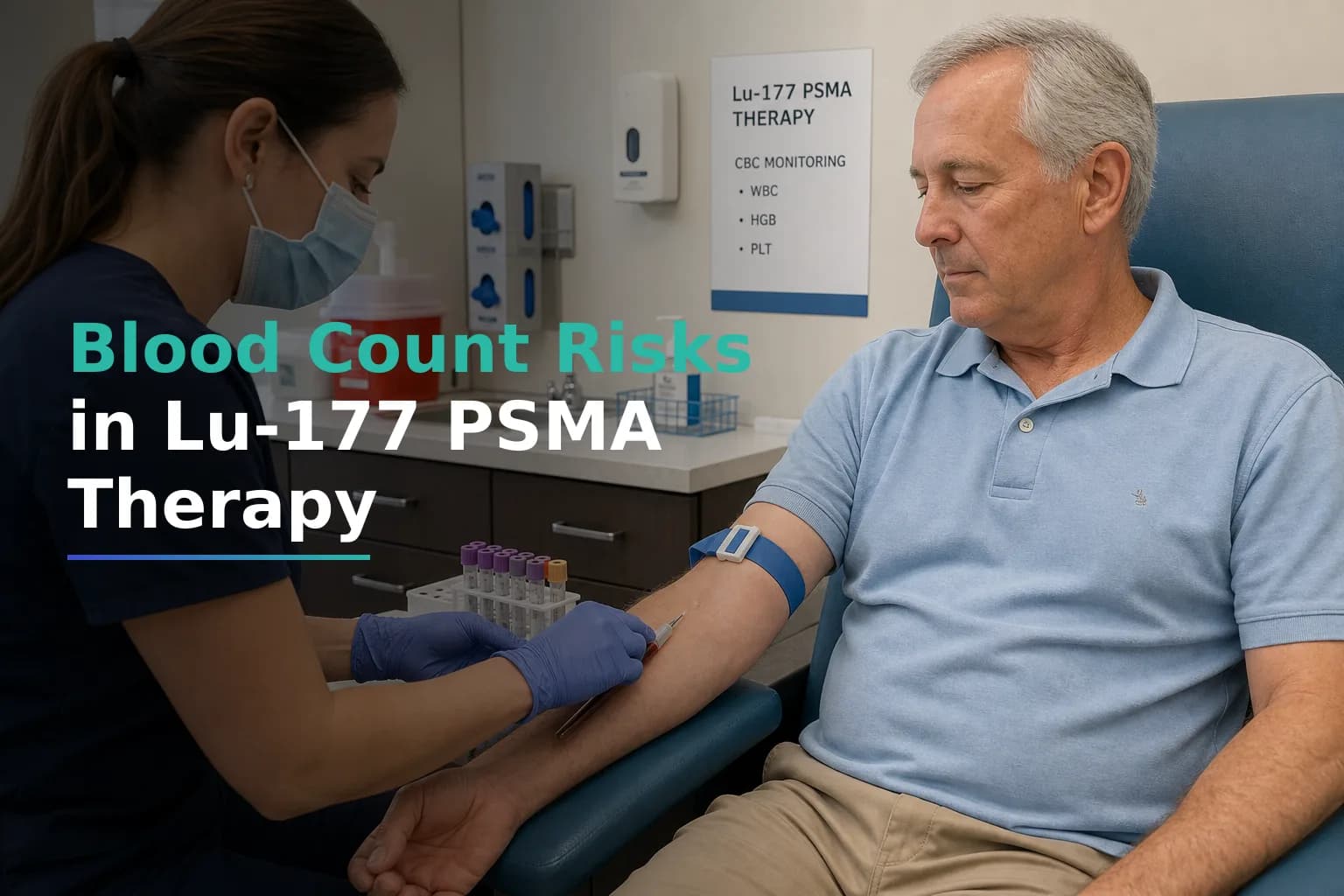
This article is for men with metastatic castration-resistant prostate cancer (mCRPC) who are receiving or considering lutetium Lu-177 vipivotide tetraxetan (sold as Pluvicto). If your doctor has mentioned that your blood counts need watching during treatment, this guide explains what that means, how often it happens, and when to seek immediate help.
The direct answer: low blood counts are a known side effect of Lu-177 PSMA therapy. Most cases are mild and do not require stopping treatment. But some cases are serious, and catching warning signs early keeps your team in a position to act before a problem becomes dangerous.
Five Warning Signs That Need Same-Day Attention During Lu-177 PSMA Therapy
- Fever of 38 degrees Celsius (100.4 degrees Fahrenheit) or higher - call your oncology team the same day or go to an emergency department immediately.
- Unusual bleeding that does not stop, or very heavy bruising with no clear cause.
- Sudden extreme fatigue that stops you from walking or doing basic daily tasks.
- Breathlessness while sitting still or at rest.
- Signs of infection: chills, drenching sweats, confusion, a very sore throat, or painful mouth sores.
What Is Bone Marrow Suppression?
Your bone marrow is the soft tissue inside your larger bones. It is where your body makes three types of blood cells:
- Red blood cells - these carry oxygen throughout your body using a protein called hemoglobin.
- White blood cells, including neutrophils - these fight infections, especially bacterial infections.
- Platelets - these help your blood clot when you have a cut or injury.
When bone marrow is affected by radiation or chemotherapy, it produces fewer of these cells. This is called myelosuppression or bone marrow suppression. Fewer red blood cells means less oxygen delivery. Fewer white blood cells means a weaker immune system. Fewer platelets means a higher risk of bleeding. Your care team checks your full blood count before every cycle of Lu-177 PSMA therapy, including the first infusion and before every one after that.
Why Does Lu-177 PSMA Therapy Affect the Bone Marrow?
In men with mCRPC, prostate cancer cells have spread to the skeleton. Those cells sit very close to or sometimes within the bone marrow itself. When lutetium Lu-177 vipivotide tetraxetan targets the PSMA protein on those cancer cells and releases beta radiation, some of that radiation reaches the nearby marrow.
Some lutetium-177 also circulates in your bloodstream before your body removes it through the kidneys. This adds a small additional radiation dose to marrow throughout your body.
Research published in the European Journal of Nuclear Medicine shows that the radiation dose to bone marrow during Lu-177 PSMA therapy is generally well below the level that causes lasting marrow damage - approximately 0.012 Gray per gigabecquerel (GBq) of activity given, compared to an estimated bone marrow tolerance dose of around 2 Gray (Karimzadeh Afshar et al., European Journal of Nuclear Medicine and Molecular Imaging, 2021). However, in patients with heavy bone disease, more marrow is exposed to radiation, and the risk of meaningful blood count drops increases accordingly.
How Common Are Low Blood Counts? What the VISION Trial Found
The VISION trial was the large phase 3 study that led to FDA approval of lutetium Lu-177 vipivotide tetraxetan in March 2022. According to the FDA prescribing information for Pluvicto, the rates of severe (grade 3 or 4) blood count drops in the treated group were as follows:
- Decreased hemoglobin (anemia): approximately 15% of patients.
- Decreased platelets (thrombocytopenia): approximately 9% of patients.
- Decreased white blood cells (leukopenia): approximately 7% of patients.
- Decreased neutrophils (neutropenia): approximately 4.5% of patients.
Any anemia, including mild cases, occurred in roughly one in three patients receiving Lu-177 PSMA plus standard care, compared to about one in five receiving standard care alone. Most of these cases were low-grade and did not require stopping treatment.
Rare but serious events did occur. Grade 3 or higher pancytopenia - a combined drop in all three blood cell types at once - occurred in about 1.1% of patients and was linked to two fatal events. Separately, one patient died from sepsis while having concurrent low neutrophil counts, and one patient died from bone marrow failure (FDA Pluvicto prescribing information, 2022). These outcomes are uncommon, but they are why myelosuppression has a formal safety warning in the prescribing information and why monitoring is part of every treatment protocol.
The Three Types of Low Blood Count and What They Feel Like
Anemia - Low Red Blood Cell Count
Anemia is the most common blood count change during Lu-177 PSMA therapy. It means your body has fewer red blood cells to carry oxygen. You may notice:
- Unusual tiredness or weakness, even after a full night of sleep.
- Pale or slightly yellowish skin.
- Shortness of breath with light activity, such as walking across a room.
- Dizziness or feeling faint when you stand up quickly.
Mild anemia during treatment may partly explain the fatigue that many patients describe in the weeks following each infusion. Severe anemia may require a blood transfusion or a planned pause before the next cycle.
Thrombocytopenia - Low Platelet Count
Platelets help your blood clot after an injury. When platelet counts fall too low, minor injuries bleed longer than usual, and internal bleeding becomes a risk. Signs to watch for include:
- Bruising easily from minor bumps.
- Cuts that take longer than normal to stop bleeding.
- Tiny red or purple spots on your skin - these are called petechiae.
- Unexpected nosebleeds or bleeding gums.
- Blood in your urine, or stool that looks dark red or black.
In the VISION trial, two fatal bleeding events occurred when platelet counts were very low. Report a new bruise or a nosebleed that won't stop to your oncology team the same day.
Neutropenia - Low White Blood Cell Count
Neutrophils are a type of white blood cell that fight bacterial infections. When their count drops too low, your body struggles to defend against bacteria that it would normally clear quickly. A fever in this setting is called febrile neutropenia and is a medical emergency. Warning signs include:
- Fever above 38 degrees Celsius (100.4 degrees Fahrenheit) - do not wait overnight.
- Shaking chills or drenching sweats.
- Sore throat or painful mouth sores that appear suddenly.
- Redness, warmth, or swelling around any wound, IV site, or central line.
- A new cough or shortness of breath without another clear cause.
Who Is at Higher Risk of Myelosuppression?
Not every patient faces the same level of risk. Research on Lu-177 PSMA therapy shows several factors that increase the likelihood of more pronounced blood count drops (Alberts et al., European Journal of Nuclear Medicine and Molecular Imaging, 2022):
- Prior chemotherapy - agents such as docetaxel or cabazitaxel can reduce how much reserve capacity the bone marrow has, leaving it more vulnerable to radiation.
- Prior radiation to the pelvis or spine - these regions contain major marrow sites, and previous radiotherapy may have already reduced marrow function before Lu-177 therapy begins.
- Heavy bone disease burden - more bone metastases means more marrow tissue is exposed to radiation from each infusion of Lu-177.
- Already-low blood counts at baseline - if your hemoglobin, platelet count, or neutrophil count is borderline before you start, there is less room for further decline before reaching a threshold that requires action.
Your oncology team will assess all of these factors before your first cycle. To understand what specific lab values must be within range before treatment can proceed, see our guide on the blood tests and scans needed before Lu-177 PSMA treatment.
How Your Team Monitors Your Blood Counts During Each Cycle
Your team performs a full blood count check before every infusion. Most treatment programs also schedule a midcycle blood test - typically two to four weeks after each dose - when counts are often at or close to their lowest point (Best Patient Care Practices for PSMA-Targeted Radiopharmaceutical Therapy, 2024). This is when problems usually show up if they're going to happen.
If your counts fall below the required level before a scheduled infusion, your team will delay the next cycle until they recover. If counts drop severely between cycles, your team may reduce the activity level of future doses or, in rare cases where the marrow does not recover adequately, stop treatment entirely.
Your team continues monitoring after your final cycle. For a broader view of what the follow-up period looks like, see our guide on what to monitor after your Lu-177 PSMA cycles and how to plan the next steps.
What Happens If Your Counts Drop Too Low?
Your medical team has a structured response, depending on how much blood counts have changed:
- Delaying the next cycle - giving your marrow time to recover before you receive more radiation. This is the most common intervention and does not mean treatment is failing.
- Reducing the activity dose - delivering less radioactivity per cycle to lower the cumulative burden on the marrow across the treatment course.
- Supportive measures - for anemia, this may include iron supplementation or, in severe cases, a blood transfusion. For infections related to low neutrophils, antibiotic treatment may be needed. Your team will make all of these decisions based on your specific lab results and symptoms.
- Stopping treatment - this is rare, reserved for situations where the marrow does not recover to a safe level despite giving it additional time.
Practical Steps to Stay Safe Between Cycles
There are things you can do outside clinic visits to lower your risk and catch problems early:
- Wash your hands frequently - especially before meals and after touching public surfaces. Hand hygiene is one of the most effective steps when white blood cell counts may be low.
- Avoid contact with people who are unwell - particularly in the two to three weeks after each infusion, when counts may be near their lowest.
- Take extra care around sharp objects - minor cuts matter more when platelets are low.
- Take your temperature each evening during the post-infusion period. Catching a fever early gives you time to act before it escalates.
- Keep every scheduled blood test appointment - even if you feel well. Blood count drops can occur before you notice any symptoms.
- Let your local doctor know about your treatment - so that if you develop a fever or signs of infection away from your cancer center, they understand the clinical context and can act quickly.
Many patients ask whether nutritional support can help protect their blood counts during this period. No supplement replaces clinical monitoring, but nutrients that support blood cell production - including iron, vitamin B12, folate, and vitamin D - are worth discussing with your team, particularly if your diet has been affected by treatment-related fatigue or reduced appetite. You can explore vitamin and mineral options to discuss with your care team.
If you are traveling internationally for Lu-177 PSMA therapy - for example, coming to India from the UAE, Nigeria, Bangladesh, or elsewhere - make sure you have a clear plan for managing symptoms between cycles while you are away from your usual doctors. Ask your medical team to assess your blood count history and bone disease burden before you go. You can also contact Art of Healing Cancer to discuss your situation with their nuclear medicine team.
Blood counts are not the only organ system your team watches closely during Lu-177 PSMA therapy. Kidney function is monitored in parallel. For more detail on that aspect of safety, see our guide on protecting kidney function during Lu-177 PSMA therapy for bone metastases.
If you have questions about whether your current blood count results affect your eligibility, you can send your recent lab reports through the Lutetium Therapy contact form for a review. If Lu-177 PSMA therapy turns out not to be suitable for your situation, the team can also point you toward a second opinion on alternative options.
When to Talk to Your Doctor
Contact your oncology team the same day - or go to an emergency department if you cannot reach them - if you notice any of the following during or between your treatment cycles:
- Fever of 38 degrees Celsius (100.4 degrees Fahrenheit) or higher.
- Bleeding that is unusually heavy or that does not stop within a normal time.
- Severe unexplained bruising, especially in areas you have not bumped.
- Sudden extreme fatigue that stops you from walking or doing basic tasks.
- Breathlessness while sitting or resting.
- Any signs of infection: shaking chills, high fever, confusion, painful mouth sores, or a sore throat that appears suddenly.
For gradual, mild changes - feeling somewhat more tired than usual or noticing occasional small bruises - raise these at your next scheduled visit. Do not adjust your medications, skip scheduled blood tests, or try to manage these changes on your own without guidance from your team.
This article is for general information and is not a substitute for medical advice. Always consult your oncologist or care team about your specific situation.
Frequently asked questions
Can Lu-177 PSMA therapy cause permanent bone marrow damage?
Research to date suggests that lasting bone marrow damage is uncommon with standard treatment courses of Lu-177 PSMA therapy. The radiation dose delivered to the bone marrow is generally well below levels associated with long-term harm. However, patients who have already had prior chemotherapy or pelvic radiation may have less marrow reserve, which can make recovery from any suppression slower. Your team will track your blood counts at each cycle and continue monitoring after treatment ends to assess how well your marrow is recovering.
Will I need a blood transfusion during Lu-177 PSMA therapy?
Some patients with significant anemia do need a blood transfusion during their treatment course, but this is not a routine requirement for every patient. Your medical team will check your hemoglobin level before each cycle and will decide whether supportive measures such as a transfusion are appropriate based on your symptoms and lab results. Most patients with anemia during Lu-177 PSMA therapy experience mild to moderate changes that do not require transfusion.
How soon after an infusion do blood counts reach their lowest point?
Blood counts generally reach their lowest level, a point called the nadir, somewhere between two and four weeks after each infusion of Lu-177 PSMA therapy. This is why most programs schedule a midcycle blood count check at around that time, in addition to the check before each dose. Counts typically recover before the next scheduled cycle in most patients, which is why cycles are spaced several weeks apart.
Can I take iron or vitamin supplements to protect my blood counts during treatment?
Iron supplements may help if your anemia is related to iron deficiency, but low iron is not always the cause of reduced blood counts during radioligand therapy. Your doctor will check the underlying reason for any anemia before recommending supplementation. Other nutrients involved in blood cell production, such as vitamin B12 and folate, may also be relevant depending on your baseline nutrition. Always tell your team about any supplements you are taking, as some can interact with other medications.
Does myelosuppression mean I have to stop treatment permanently?
Not necessarily. Most cases of low blood counts during Lu-177 PSMA therapy are managed with cycle delays or reduced activity doses rather than permanent discontinuation. Your team aims to complete as many cycles as safely possible while keeping your blood counts within an acceptable range. Permanent stopping of treatment is reserved for rare situations where the bone marrow does not recover to a safe level despite giving it additional time between cycles.
Does having many bone metastases make myelosuppression more likely?
Yes. A heavier burden of bone metastases means that more of your bone marrow is exposed to radiation from Lu-177 during each infusion, since the therapy targets cancer cells that are sitting within or close to the marrow space. Patients with widespread bone disease are generally monitored more closely. In some cases, a very high bone disease burden may affect decisions about treatment eligibility or the spacing of cycles. Your team will weigh this alongside your baseline blood count results when planning your treatment.